From a memory to a fragrance.
This began with something incredibly simple: wanting to remember a smell.
There is a particular scent that belongs to those first weeks with a newborn. Warm skin, clean cotton, milk, softness — something instantly recognisable, yet almost impossible to describe.
And, like so many things about those first days, it disappears far too quickly. We wanted to know whether it could be preserved.
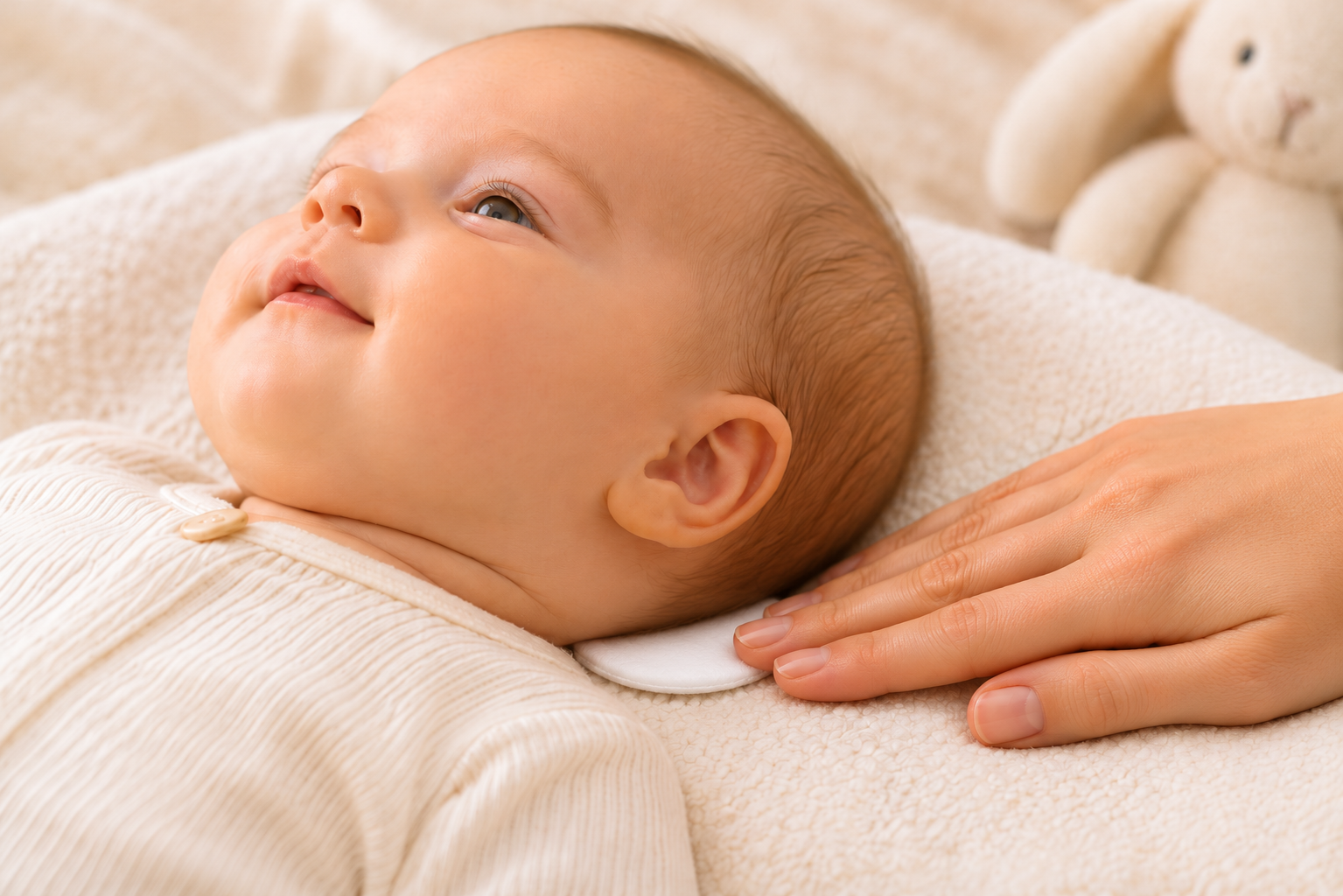
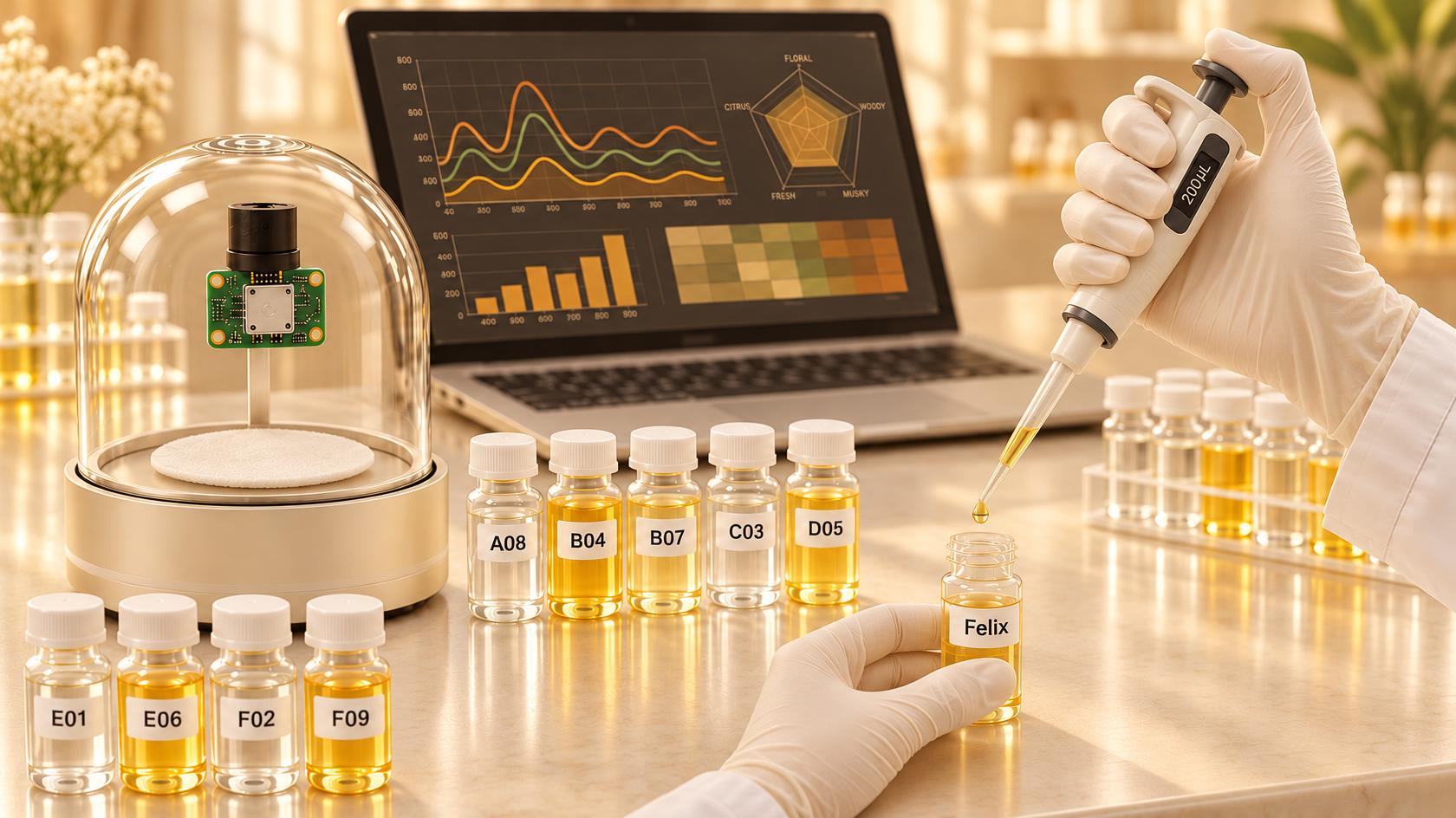
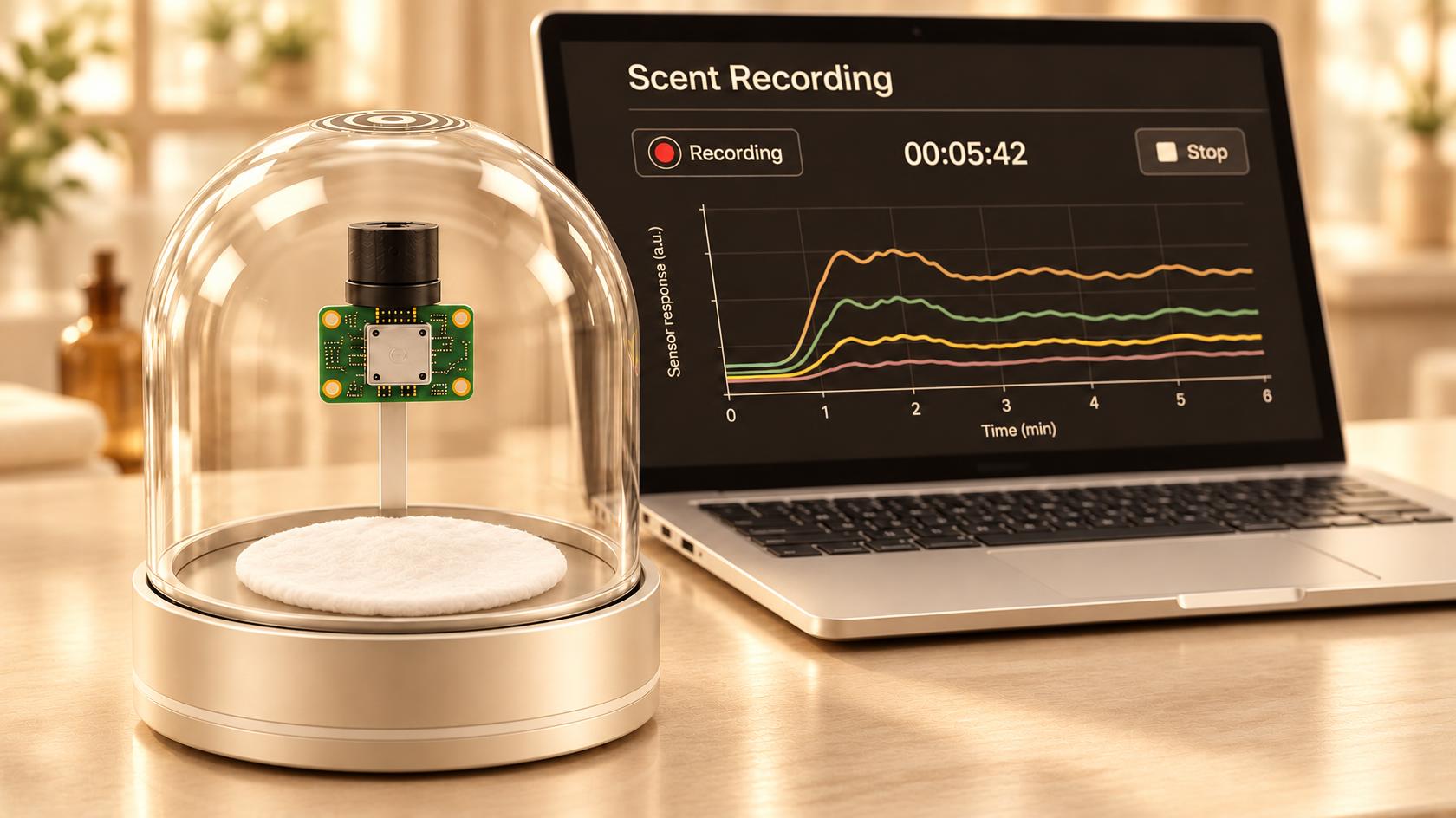
The scenes below illustrate the proposed capture and laboratory journey. At home, use the cotton pad beneath the back of your baby’s head only while they are awake and continuously supervised. Never use a loose pad during sleep or leave it in a cot.
Capturing something that cannot be photographed.
The first stage was not about making perfume at all. It was about understanding the scent itself — your baby's scent, not a category.
Rather than starting with an existing fragrance and trying to make it smell “baby-like”, we spent time capturing and studying the real aromatic signature behind those memories. Multiple samples were taken at different moments and compared to identify what remained consistent and what was simply part of the surrounding environment.
The objective was never to reproduce one single moment perfectly. It was to find the common thread — the scent that made us immediately think: this is it.
That is also why no two My Baby's Scent keepsakes are the same. Every formula is built from the ground up around one child's own aromatic signature, with an almost infinite number of possible combinations. Nothing is chosen from a shelf — there is no generic “baby smell” to buy.
Turning a scent into a formula.
Once that signature had been established, the work moved into perfumery. Individual accords were created and adjusted repeatedly, sometimes by tiny amounts. One version would feel too powdery. Another too clean. Another too sweet. Some were technically close but simply did not trigger the right emotional response.
That became an important part of the process. The measurements could guide us, but ultimately the fragrance had to feel right.
Over many iterations, the formula became simpler, softer and more natural. The goal was not to make a traditional “baby perfume”. It was to recreate the impression of warm newborn skin as faithfully as possible.
And because that process starts from each child's own captured samples, the same method can be repeated for any family. Every ScentPrint™ ID carries its own formula — deliberately designed to be customised, one unique blend for one unique baby.
From our experiments to the laboratory.
Once we reached a formula that captured what we were looking for, we needed to turn it into a real fragrance. That meant working with specialist fragrance and cosmetic laboratories to translate the original formula into something that could be produced consistently and safely.
The laboratory process included refining the perfume concentrate, evaluating the ingredients, checking compatibility with the alcohol base and assessing how the fragrance developed over time. Small pilot batches were produced and compared back to the original reference again and again.
Some ingredients behaved differently once introduced into an alcohol-based perfume. Certain notes became brighter, others faded into the background. Each adjustment therefore had to preserve the character of the original scent rather than simply reproduce the same proportions on paper.
Making it a real perfume.
The final fragrance uses a professional perfumery alcohol base rather than the materials we originally used during development. That change matters.
Alcohol allows the fragrance to lift naturally, giving the scent the diffusion and evolution you expect from a fine fragrance while keeping the intimate character that inspired it in the first place.
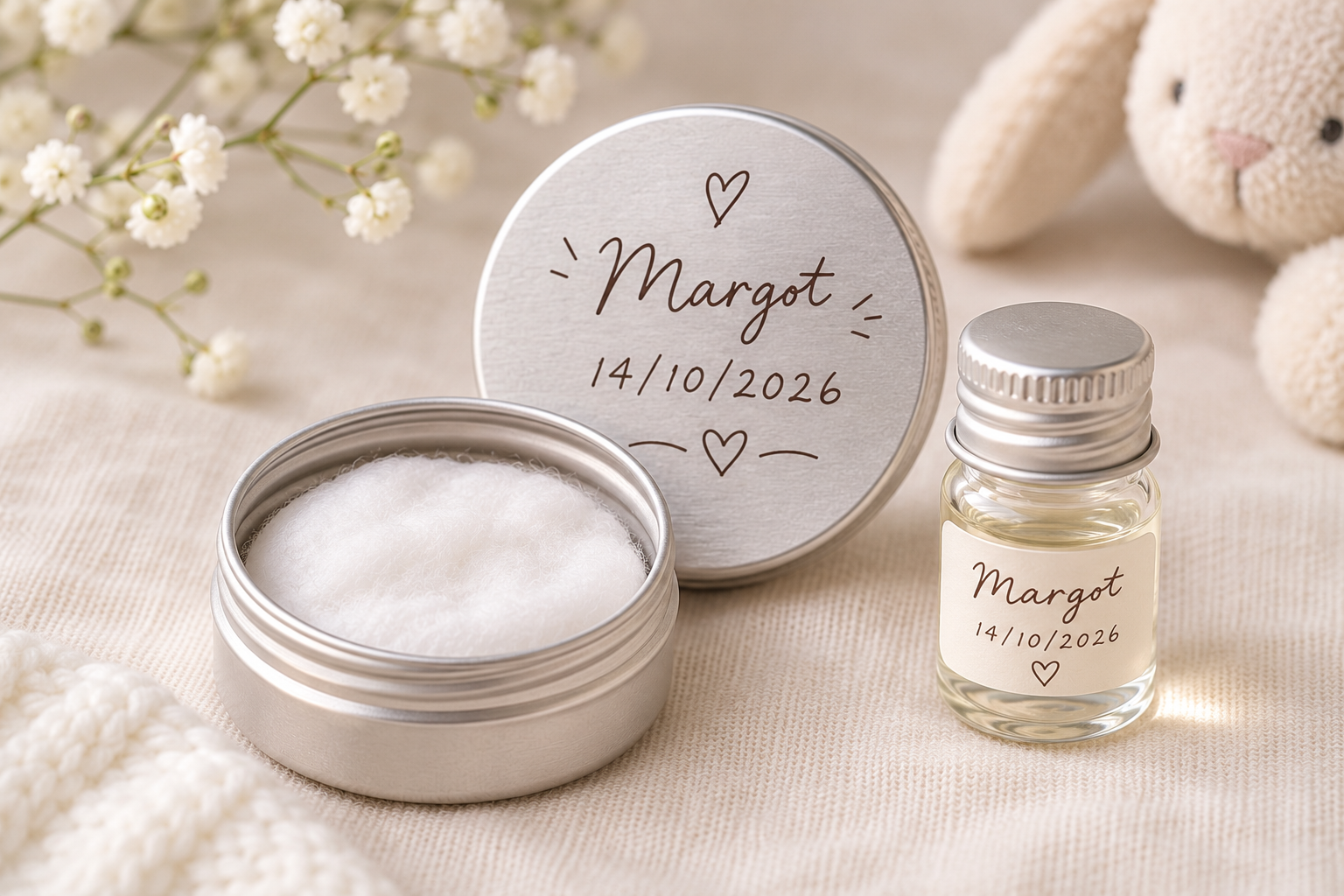
Before production, the finished formula went through the appropriate fragrance safety, stability and regulatory assessments, with the manufacturing documentation required for a cosmetic fragrance. Only after that process was complete did it become the scent you see today, held in a small bottle. Drops added to cotton inside a personalised metal tin turn it into a memory you can open again.
 The part we wanted to preserve
Technology helped us understand. Perfumery made it beautiful.
But neither of those things is really why we created this. We created it because memories change surprisingly quickly.
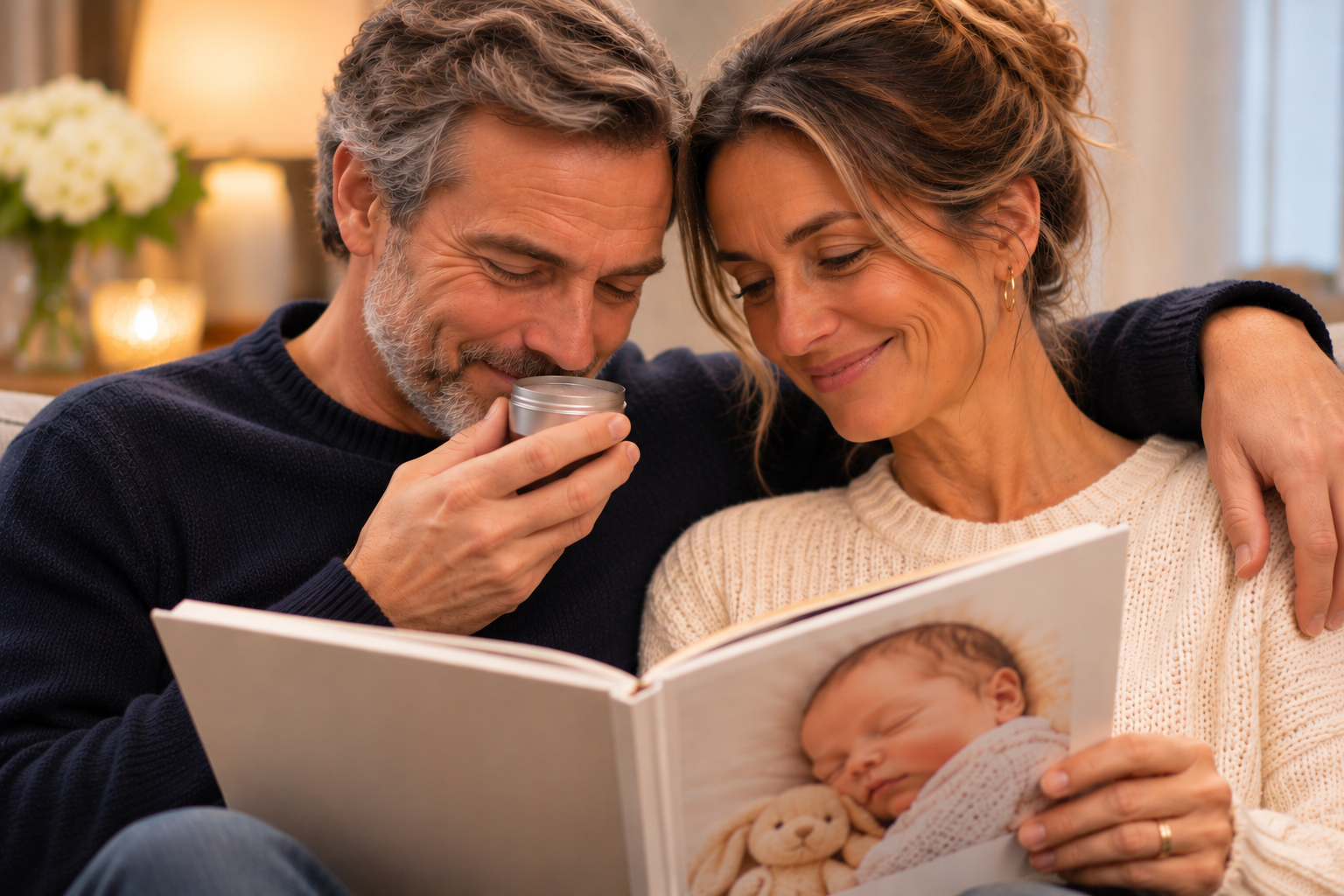
A photograph can remind you what your baby looked like. A video can remind you how they moved or sounded. We wanted to preserve something else. The smell of those first days — your baby's, and no one else's.